
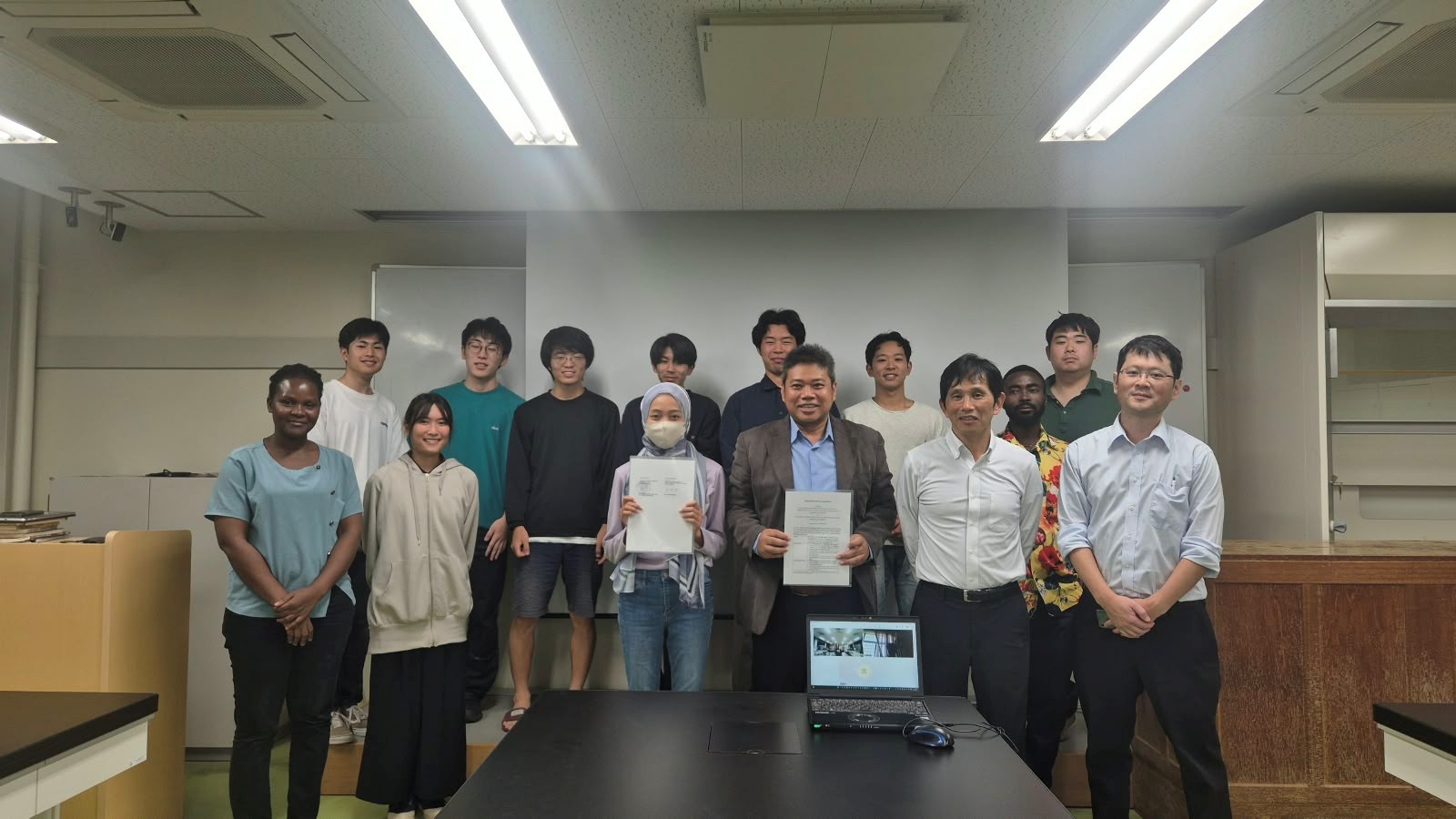
Semarang – The Agroecotechnology Study Program, Faculty of Animal and Agricultural Sciences (FPP), Universitas Diponegoro (Undip), continues to expand its international academic network by exploring research collaboration with the Faculty of Agriculture and Marine Science, Kochi University, Japan. The proposed collaboration encompasses the three pillars of higher education, education, research, and community service, with a particular focus on rice research investigating the effects of extreme temperatures (heat stress) on rice growth and grain quality amid the growing challenges of climate change
This initiative was pursued through an academic visit by Albertus Fajar Irawan, Ph.D., a lecturer in the Agroecotechnology Study Program at FPP Undip, to Kochi University from 12 to 25 October 2026. The visit was part of the staff exchange program sponsored by Undip’s World Class University (WCU) program. It also represents a strategic step toward strengthening institutional ties and establishing opportunities for long-term research collaboration with academic partners in Japan.
The initiative is further strengthened by the achievement of an alumnus of the Agroecotechnology Study Program in securing a prestigious opportunity to pursue postgraduate education in Japan. Nosa Finalia, a graduate of the 2020 cohort, was awarded a scholarship from the Japanese Government through the MEXT Asia, Africa and Pan Pacific (AAP) scheme. The scholarship enables her to pursue a two-year master’s program, followed by a three-year doctoral program, under the supervision of Prof. Akira Miyazaki at Kochi University.
Her achievement followed a rigorous selection process that included an interview. Nosa Finalia commenced her studies at Kochi University on 26 September 2026. Her presence at the university provides an additional link in strengthening academic relations between the two institutions while demonstrating the opportunities available for Agroecotechnology graduates from Undip to pursue advanced studies and develop their research capabilities internationally.
During discussions with Prof. Akira Miyazaki, Head of the Crop Science Laboratory, the importance of this research for sustainable food production, particularly in Indonesia, was highlighted. As rice remains one of Indonesia’s staple food crops, its production faces increasingly complex challenges associated with climate change and the growing risk of exposure to extreme temperatures, particularly in tropical regions.
High temperatures during the reproductive stage of rice development can disrupt grain formation and filling. The severity of these effects depends on the intensity and duration of heat exposure. Such conditions can increase the risk of spikelet sterility and incomplete grain filling, potentially reducing both crop yield and grain quality.
The proposed Implementation of Agreement is expected to serve as an initial step toward establishing a longer-term research collaboration agreement. Through this partnership, the two institutions aim to explore opportunities for joint research, strengthen faculty and student exchanges, promote collaborative scientific publications, and enhance the research capacity. For the Agroecotechnology Study Program at FPP Undip, this initiative forms part of its broader efforts to strengthen the internationalization of higher education and increase the contribution of agricultural research to addressing real-world challenges. By connecting academic expertise, alumni networks, and strategic research priorities, the collaboration with Kochi University is expected to develop into a productive partnership that contributes to food security and strengthens agricultural resilience to climate change.